Polski
  Español
  Italiano
  Deutsch
Are there animals that practically do not age?
 28 September 2026
  kama
kama Ageing seems inevitable. As we grow older, our cells regenerate less efficiently, the risk of disease increases, and the body gradually loses its strength and efficiency. For many years, scientists believed that this applied to all living organisms. Today, we know that this is not true. In nature, there are species in which the ageing process occurs extremely slowly, while some can even repeatedly “rejuvenate” their bodies. However, this does not mean that they are immortal. Most of them can still die from disease, predators, or environmental changes. Biologists distinguish between death caused by external factors and biological ageing, which is the gradual deterioration of an organism’s functioning over time.
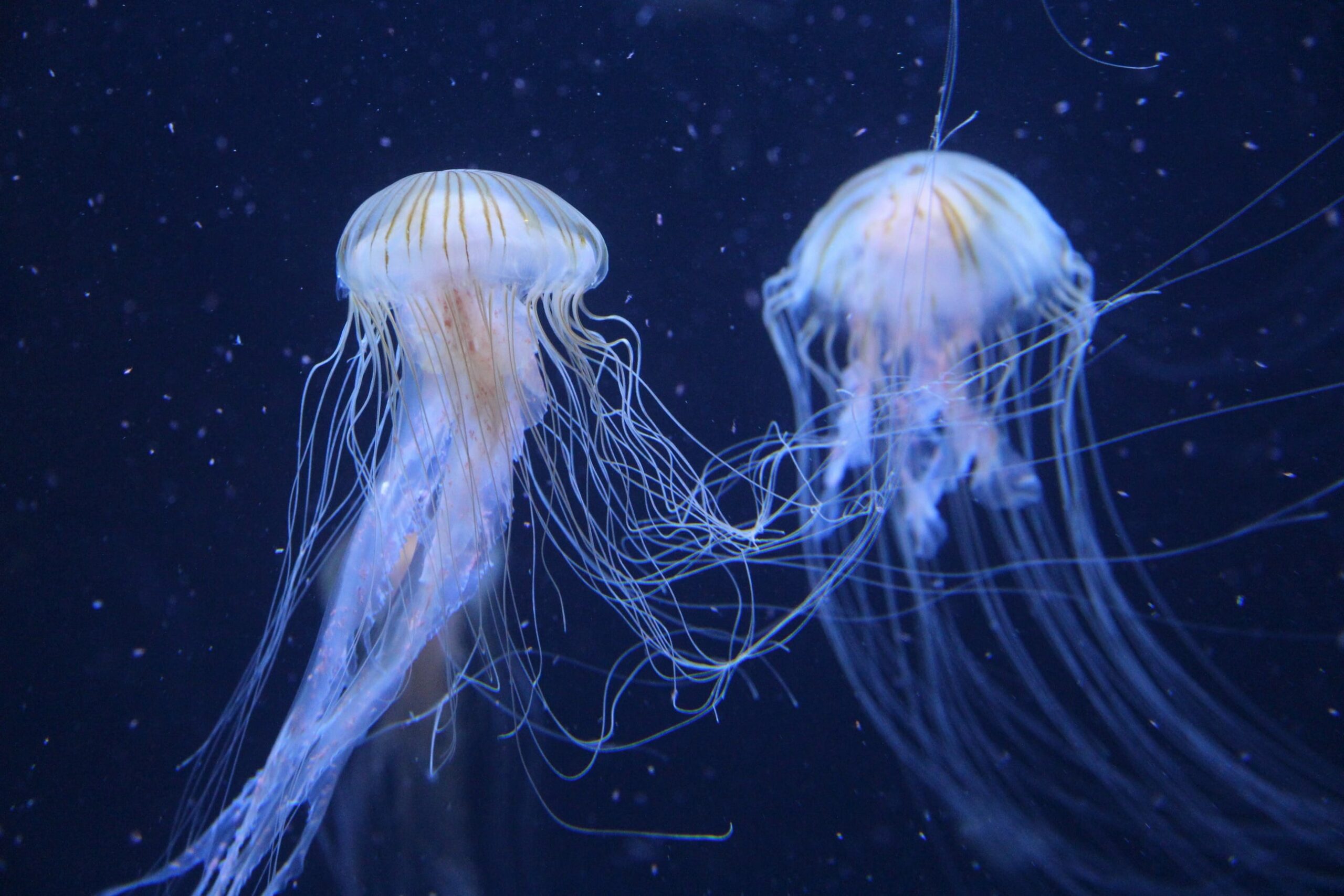
The best-known example is the small jellyfish Turritopsis dohrnii, often called the “immortal jellyfish.” When it is injured or exposed to unfavourable conditions, it can reverse its development. Instead of dying, it transforms back into a younger stage of life—a polyp—and then develops into an adult jellyfish again. This process is known as cell transdifferentiation because mature cells change their function and form new tissues. In theory, this cycle can be repeated many times. In practice, however, most jellyfish die earlier due to disease or because they are eaten by other animals. For this reason, scientists do not speak of true immortality, but rather of an extraordinary ability to rejuvenate the body.
Equally fascinating is the hydra, a small freshwater organism related to jellyfish. Studies conducted over many years have shown that some species display practically no typical increase in mortality with age. This is because their stem cells continuously renew their tissues throughout their entire lives. Among vertebrates, the naked mole-rat has attracted particular scientific attention. This small rodent can live for more than 30 years—up to ten times longer than mice of a similar size. What is more, it very rarely develops cancer and remains physically fit for most of its life. The Greenland shark, meanwhile, can live for more than 250 years and, according to some studies, possibly even around 400 years. It is currently considered the longest-living known vertebrate.
Why do these animals age differently from humans? The answer is not yet known. Researchers are analysing their DNA, the way they repair damaged cells, the activity of their stem cells, and the mechanisms that protect them against cancer. Research on naked mole-rats, hydras, and jellyfish is helping to advance the modern biology of ageing. The aim is not to create an “elixir of immortality,” but to understand why some organisms age very quickly while others can remain healthy and active for decades or even centuries.
The most honest answer, therefore, is yes: there are animals that age extremely slowly or possess exceptional regenerative abilities. However, this does not mean that they are immortal. Nature shows us that ageing is not a single, universal process. Evolution has created many different ways of dealing with the passage of time. Perhaps these extraordinary organisms hold knowledge that may one day help humans remain healthy and active for longer.